Need home ac repair in Salem Lakes?
Tell us what your system is doing and where you are. Send the form or email contact@explainedhall.garden, and we will help you reach a provider in our network.
No obligation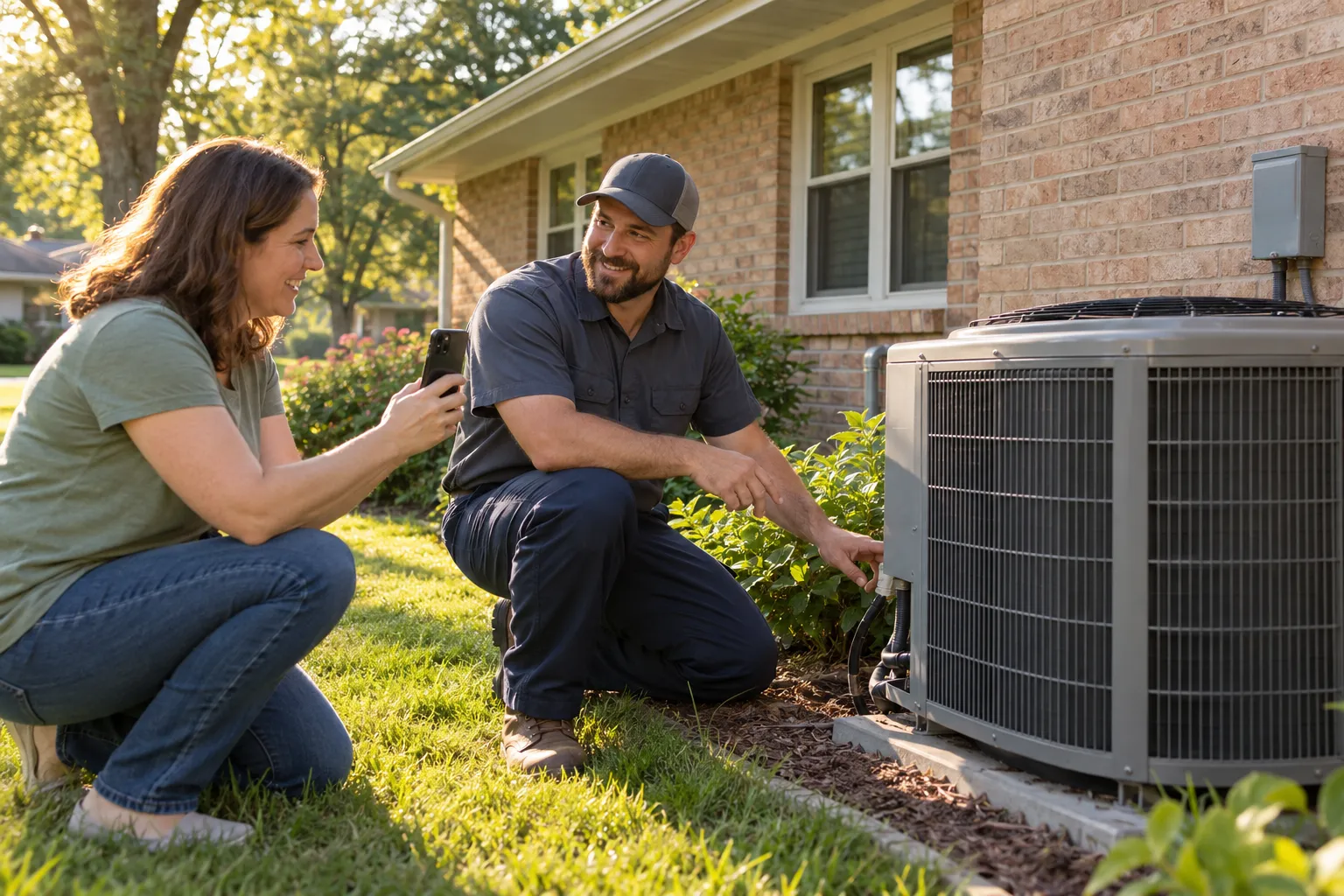
Request an estimate from a local provider
When your air conditioner quits, the house gets uncomfortable fast. This page walks you through the first hour in plain steps, from simple checks you can do yourself to knowing when to stop and ask for help. Explainedhall Heating & Air is a referral service, so the repair itself is done by an independent provider in our network who works in Salem Lakes and the Salem Lakes area.
Most people feel better once they have a plan. Check the basics, take a few photos, write down what you noticed, and then talk to a local provider about HVAC service. Clear notes make estimates easier to compare, and they help if an insurance question comes up later. Whether you need emergency AC repair or a quieter fix, the goal is the same: a steady head, a written quote, and a cooler home.
A warm house on a humid evening feels urgent. Take one slow breath. Most of the next hour is simple checking, and none of it needs tools. Start with the easy things. They take a few minutes and can save you a visit.
Make sure it is set to cool and the target is a few degrees below the room. If the screen is blank, try fresh batteries. Still nothing? Write that down. A provider will want to know.
Look at your electrical panel. If the AC breaker has tripped, switch it fully off, then back on once. Do not keep flipping it. Next, slide out the air filter. A clogged filter chokes airflow and can let ice form on the coil.
Stand back and look. Is the fan turning? Is there grass, leaves or debris packed around the cabinet? Clear loose material gently, with the power off. Never poke into the unit. Ice on the lines, or water pooled near the indoor unit, is worth a photo.
Some signs mean you should turn the system off and step away. A burning smell, a loud buzzing that will not quit, sparks, or water near the electrical panel all count. In a basement home, stay clear of standing water near the panel or the equipment. Comfort can wait. Safety cannot. Many providers can respond quickly, and you can Request a callback to check provider availability for emergency AC repair.
This part takes five minutes, and your phone does the work. A clear record helps a provider find the problem faster. It also helps you compare estimates fairly.
Some problems build slowly. Watch for these:
One sign alone may be minor. Two or three together deserve a visit from a local HVAC service provider.
A provider usually starts with questions. When did it stop? What did you notice? Then they check the thermostat, power supply, filter, coil, fan and refrigerant lines. They explain what they found and give you a written estimate before work begins. You decide whether to go ahead. It is fine to ask to see the worn part.
Capacitors and contactors wear out in hot weather. They are small parts, yet a failed one can leave a unit humming without starting.
Low refrigerant means a leak somewhere. Ask the provider to find the leak, not just add more.
Poor airflow or a blocked condensate line can ice the coil or send water into the house.
Seasons shape homes. Long, humid summers make an AC work hard for months. Severe thunderstorms and hail can dent fins and cause power surges. Spring flooding can reach outdoor units and basement equipment. Frame houses and bungalows built decades ago may have tight ducts or older wiring, which adds strain. Share these details when you describe the problem.
A repair often makes sense for a newer system with one failed part. Replacement deserves a closer look when the system is well past ten or fifteen years old, repairs keep stacking up, or it uses an older refrigerant that is getting harder to find. Ask the provider to put both options in writing. If a repair costs close to half the price of a new system, pause and compare before you decide.
Asking is not being difficult. It is being careful.
Some policies may cover sudden damage, such as a power surge or hail. Normal wear usually is not covered, so check your policy. Providers can often help document damage for a claim. Keep your photos, notes and written estimate together in one folder.
Ask for a copy of the invoice and note which parts were replaced. Change the filter on schedule and keep the area around the outdoor unit clear. Small habits make the next hot spell calmer.
A provider checks power, thermostat, airflow and refrigerant to find why the air isn't cooling.
Worn capacitors, fan motors and contactors can be replaced during the visit.
You get a clear quote listing parts and labor before any work begins.
Providers look for refrigerant leaks, frozen coils and blocked condensate lines.
Prices change with the system, the part and the season. These are typical U.S. ranges only. Your cost may be lower or higher, so ask each provider for a written quote before work starts.
| Repair item | Typical range | Notes |
|---|---|---|
| Service visit and diagnosis | $75 – $200 | Often applied to the repair; ask first |
| Capacitor or contactor | $150 – $450 | Common in hot weather |
| Condensate drain clearing | $100 – $300 | Prevents water leaks indoors |
| Fan motor replacement | $300 – $900 | Indoor or outdoor fan |
| Refrigerant leak repair | $200 – $1,500 | Depends on leak location and refrigerant type |
| Compressor replacement | $1,500 – $3,500 | May lead to a replace-or-repair talk |
Look at the thermostat, breaker and filter, then note what you find before touching anything else.
Snap the thermostat, outdoor unit and any damage, and jot down the time.
Call or send a request to talk with an independent local provider.
Review written estimates, ask your questions, then pick the repair you prefer.
Simple first-hour steps help you stay steady, check the basics and decide when it's time to ask for help.
You're connected with independent providers who know the heat, humidity and storms of your area.
Photos and notes make estimates easier to compare and help with any insurance conversation.
Request an estimate and decide on your own terms, with nothing to sign up front.
Tell us what your system is doing and where you are. Send the form or email contact@explainedhall.garden, and we will help you reach a provider in our network.
No obligationCommon causes include a clogged filter, a frozen coil, low refrigerant or a failed outdoor fan. Check the filter and thermostat first, take photos, and ask a local provider to find the real cause.
You can switch a tripped breaker off and on once. If it trips again, stop. Repeated tripping points to an electrical problem that a provider should inspect.
Burning smells, sparks, constant buzzing or water near electrical parts call for turning the system off and seeking help. Otherwise, run the basic checks and request an estimate.
Tell us what your system is doing and where you are. Send the form or email contact@explainedhall.garden, and we will help you reach a provider in our network.
No obligation